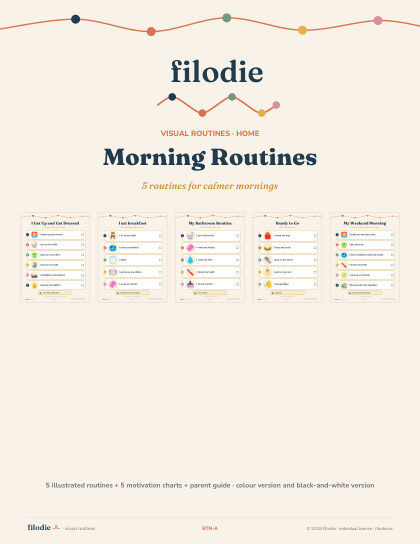
Morning visual routine: how to create one and use it with a child
Mornings are often the most stressful part of the day: little time, lots of steps and instructions repeated ten times over. A visual routine turns those spoken instructions into cues the child can check on their own, at their own pace.
Why a picture routine helps so much
A spoken instruction is gone the moment it is said. A picture stays. For a child who struggles to remember a sequence of steps, to handle transitions or to process what they hear, that permanence changes everything. This is especially true for autistic children, children with ADHD and young children, but most children benefit.
A visual routine also makes the day predictable. Knowing what comes next reduces anxiety and negotiation. The adult no longer has to repeat themselves: they can simply point to the picture.
Building the routine in 5 steps
- Observe a real morning. Write down the steps as they actually happen, in order, and spot the ones where things get stuck.
- Keep it to 4 to 7 steps. More than that becomes hard to follow. Group steps if needed: “get dressed” can be a single picture at first.
- One picture, one action. Use clear pictures, always the same ones, with a short word. Avoid pictures that show several things at once.
- Put it in the right place. At the child’s eye level, where the steps happen: the bathroom, the bedroom or near the door.
- Add a way to check off. Flipping the picture, moving it to a “done” envelope or ticking it off gives a concrete sense of accomplishment.
Introducing it to the child
Present the routine at a calm moment, not in the middle of the morning rush. Do it together for the first few days: the adult shows the picture, the child does the step, then you move on. Then gradually reduce your help until the child checks the routine on their own. Celebrate successes, even partial ones: “You looked at your routine without me reminding you!”
Common mistakes
- Too many steps at the start. Start small and add later.
- Changing the pictures often. Consistency is what makes the tool work.
- Using it as a punishment. The routine is a support, not a list of reproaches.
- Giving up too soon. Allow two to three weeks before judging whether it works.
If a morning goes badly, the routine has not failed. Note the step where things got stuck: that is often the one to break down into smaller actions.