Difficult transitions: helping a child move from one activity to the next
“Five more minutes!” Turning off the tablet, getting out of the bath, putting away the blocks or leaving the park: for some children, every change of activity becomes a battle. Transitions are one of the most common moments for a child to fall apart, and also one of the easiest to prevent.
Why transitions are so hard
Moving from one activity to another takes several efforts at once: stopping something enjoyable, accepting not knowing exactly what comes next, shifting attention and sometimes changing places. For an autistic child, a child with ADHD or an anxious child, these efforts are greater. The meltdown isn’t defiance: it is often a sign that the transition came too fast or was too unclear.
Announce before you stop
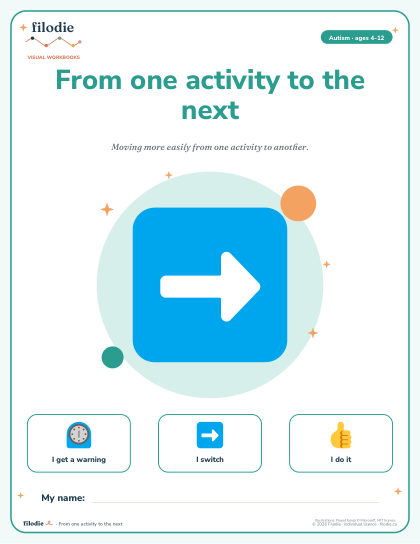
- Give a concrete warning. “In 5 minutes, we’ll tidy up” is clearer with a visual timer the child can look at.
- Use a visible end point. “Two more slides”, “at the end of the song”: an ending the child can see or count is easier to accept than an abstract time.
- Show what comes next. A visual schedule or a “first… then…” card answers the question the child is asking: what’s waiting for me?
Make the change gentler
- Offer a transition object. Carrying a small figure from the game to the table, or holding the schedule, gives the child something concrete to do during the change.
- Offer a limited choice. “Do you want to walk like a penguin or hop like a bunny to the bathroom?” The change isn’t negotiable, but how to live it can be.
- Keep a stable sequence. Daily transitions (leaving for school, the end of recess) work better when they always happen the same way.
When the unexpected happens
Some changes can’t be announced. To prepare, you can teach the idea of the unexpected at a calm moment: a “surprise” card in the schedule, a short social story, or a plan B agreed on ahead of time. The child learns that a change of plan is not a disaster.
Notice which transitions are hardest and at what time of day. Often it isn’t every transition that causes trouble, but the ones that happen when the child is already tired or that interrupt a much-loved activity.